Description
Understanding the Role of the Department of Insurance
And How to File Effective Insurance Complaints
Description
This guide explains how to file a complaint with the Department of Insurance and how regulators evaluate whether an insurer followed the law when handling your claim.
Your insurance company has a team of professionals managing your claim.
The Department of Insurance (DOI) is your team.
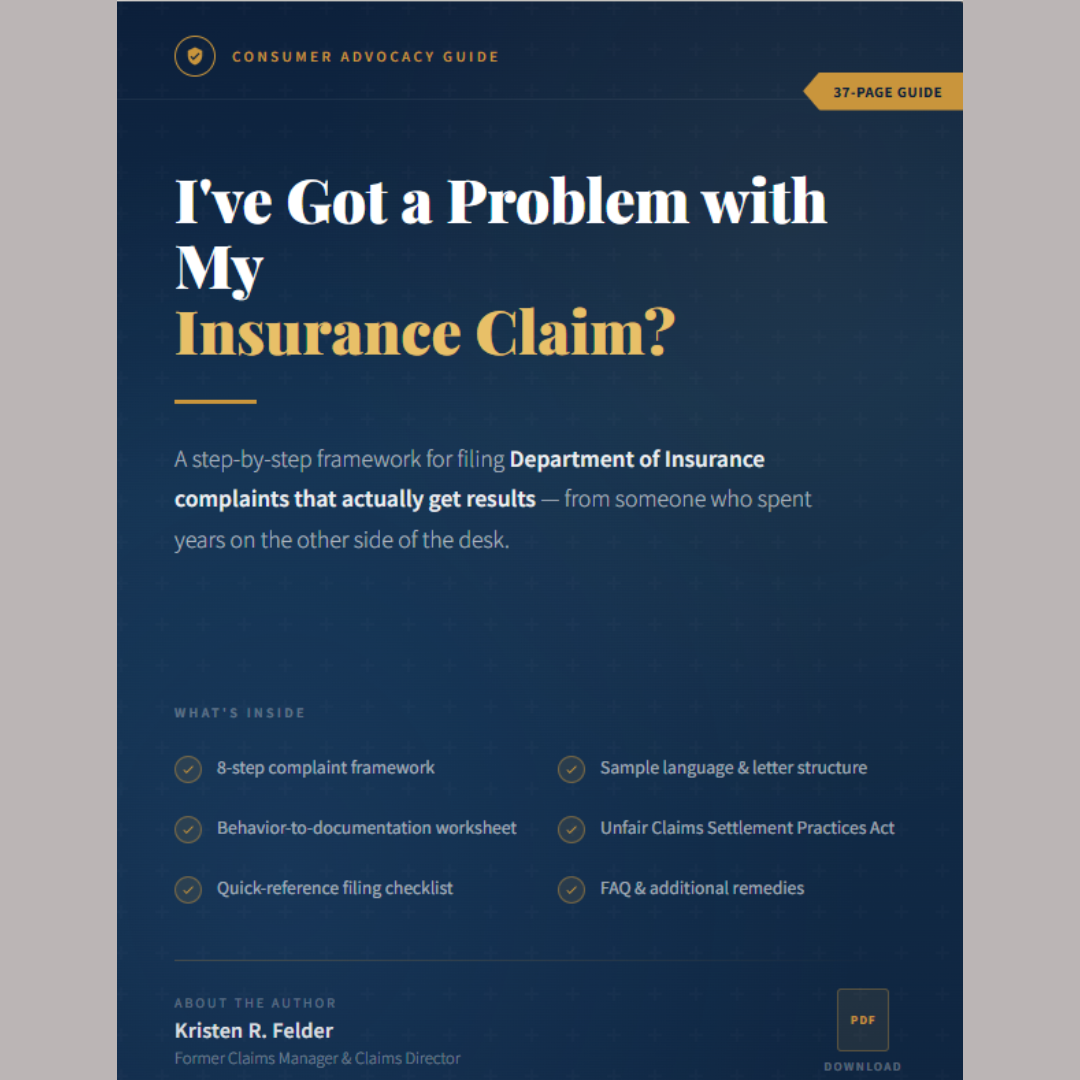
A former claims manager and claims director wrote this consumer guide. The author has years of experience responding to Department of Insurance complaints. This guide explains how the complaint process actually works.
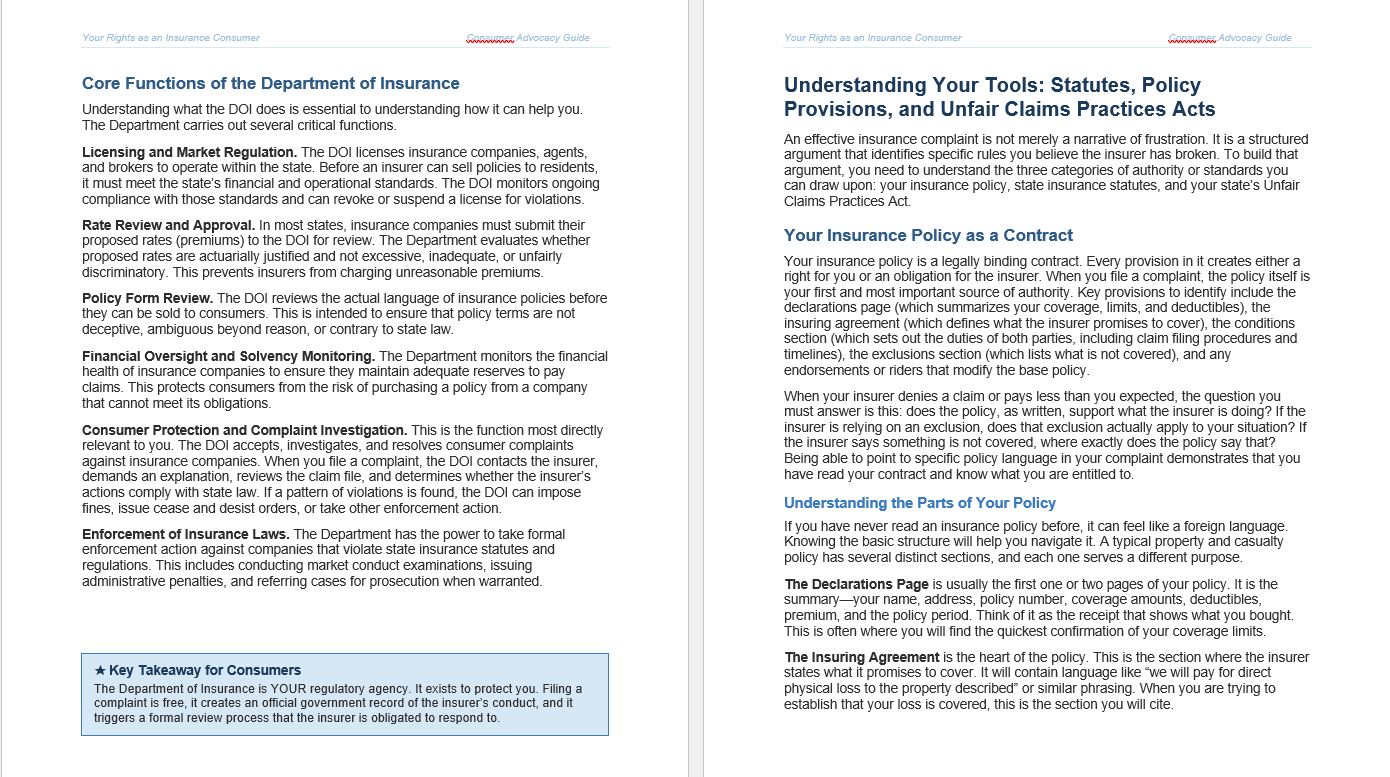
Most consumers believe the DOI decides whether their settlement amount is fair. However, the DOI evaluates something different. It determines whether the insurer followed the law and regulatory standards when handling the claim.
That distinction matters. In fact, it explains why many complaints fail.
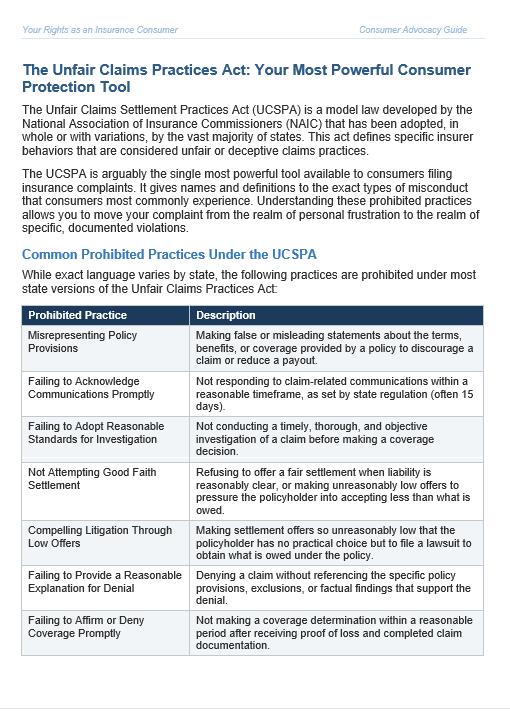
This guide shows you how to move your complaint from a personal grievance to a documented regulatory issue. You will learn how to identify claim-handling violations, cite policy provisions and state statutes, and reference your state’s Unfair Claims Practices Act.
What You Will Learn
Inside this guide you will find:
-
An eight-step framework for writing an effective complaint
-
Real-world examples and sample complaint language
-
A behavior-to-violation worksheet to build your case before writing
-
A quick-reference filing checklist
-
Guidance on additional remedies when the complaint process alone is not enough
Who This Guide Is For
This guide applies to property and casualty insurance claims, including:
-
Homeowners insurance
-
Auto insurance
-
Renters insurance
-
Commercial property policies
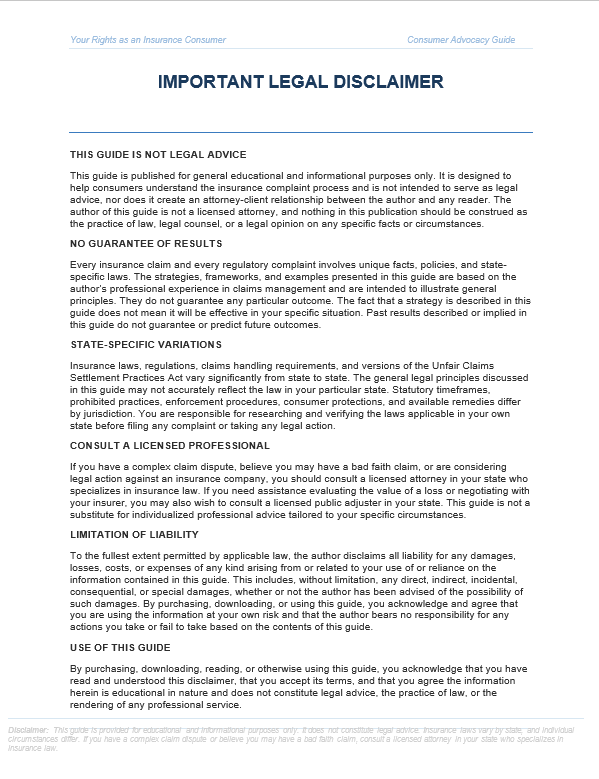
Important Disclaimer
This Guide Is Not Legal Advice
The author publishes this guide for general educational and informational purposes. It helps consumers understand the insurance complaint process.
This guide does not provide legal advice. It does not create an attorney-client relationship between the author and any reader.
The author is not a licensed attorney. Nothing in this publication should be interpreted as legal counsel or a legal opinion.
No Guarantee of Results
Every insurance claim and every regulatory complaint involves unique facts and policies. State laws also vary.
The strategies and frameworks in this guide reflect the author’s professional experience in claims management. They illustrate general principles only.
No strategy described here guarantees a specific outcome.
State-Specific Variations
Insurance laws and regulations vary widely between states. Claims-handling rules and versions of the Unfair Claims Settlement Practices Act also differ.
Because of these variations, some principles in this guide may not reflect the law in your state. You must verify the laws that apply in your jurisdiction before filing a complaint.
Consult a Licensed Professional
If you have a complex claim dispute or believe you may have a bad-faith claim, consult a licensed attorney in your state who specializes in insurance law.
You may also consult a licensed public adjuster if you need help evaluating your loss or negotiating with your insurer.
This guide does not replace professional advice tailored to your situation.
Limitation of Liability
To the fullest extent permitted by law, the author disclaims liability for damages or losses arising from the use of this guide.
This includes direct, indirect, incidental, consequential, or special damages.
By purchasing or using this guide, you agree that you rely on the information at your own risk.
Use of This Guide
By purchasing, downloading, or reading this guide, you confirm that you understand this disclaimer. You accept its terms and acknowledge that the information is educational only.
**There will be no refunds given on a digital download.
**This item is a digital PDF download and not a hard copy. The download will be available immediately after checkout.