
Inside The Auto Claims Department
How the Modern Auto Claims Model Broke Down
How the Modern Claims Model Evolved, Where It Broke Down, and Why Collision Repair Shops Must Understand the Human Change Inside the System
Introduction
Most people who deal with auto claims — consumers and repair professionals alike — are still working from a picture of the adjuster that no longer exists. They imagine someone who investigates the loss, explains the process, applies real expertise, and takes ownership of getting the claim resolved properly.
That image is not wrong because people are naïve. Instead, it is wrong because the industry quietly replaced the model it was built on without telling anyone. As a result, the gap between what people expect and what happens inside a modern claims department is the source of much of the friction collision repair shops experience every day.
The contemporary auto claims department is not simply an updated version of the old model. It is a fundamentally different operating structure built around process, segmentation, software, and workflow control. In addition, it deliberately reduced dependence on deeply trained individual adjusters.
That shift did not happen because the industry found a better way. Rather, it happened because the traditional model had become too expensive, too labor-heavy, and too difficult to scale. What makes this more than a business story is the timing.
Why Timing Matters
The operational redesign arrived during a period when the work itself was becoming harder. However, the model selected assumed the job would become easier. Auto claims were supposed to be simple and less skill-intensive than other lines, such as homeowners. Training was cut. Experienced people were leaving. Turnover accelerated. Claims handling moved toward centralization and away from field-based judgment.
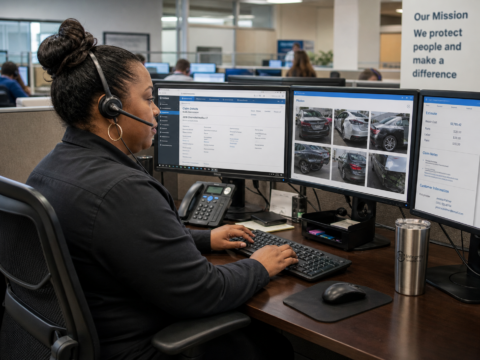
The industry was stripping expertise out of the adjuster role at the exact moment repair complexity was demanding more of it. And the people positioned to change course — consultants, claims leadership and carriers already deep in the technology investment — had too much committed to the direction to reverse it. Reversing would have meant admitting the premise was wrong.
So they pushed on, and the gap between what the system demanded and what the people inside it could deliver kept widening. My argument throughout this paper is simple: the most important change in the modern auto claims model was not technological. It was human.
The system did not simply change how files move. It changed the knowledge, confidence, and behavior of the people handling them. That human shift is why claims feel so different today, why shops run into the same walls over and over, and why consumers experience a process that bears little resemblance to the one they thought they signed up for.
The Traditional Claims Model Was Built Around the Trained Adjuster
The traditional auto claims model was built around one assumption: that a trained adjuster would serve as the central evaluator. They were expected to investigate facts, assess damage, understand repair issues, apply policy, and use judgment to reach a sound outcome. No model is flawless, and not every adjuster was equally skilled. However, structurally, the adjuster sat near the center of the process.
That centrality mattered.
The adjuster was more likely to have eyes on the vehicle and take real ownership of the file. A genuine sense of responsibility for understanding and resolving the claim. Even when shops disagreed with a decision, there was usually a sense that the person on the other end actually knew the file. They had read the damage, understood what was at stake, and recognized that their role was to evaluate rather than just route.
This traditional model continues to shape public expectations. Consumers still frequently believe that the adjuster is there to guide them, explain the process fairly, and help resolve the claim properly. Likewise, many collision repair professionals still measure insurer behavior against that older standard of adjuster knowledge, authority, and accountability.
That is the first problem: many people are judging claim handling by a standard the industry abandoned.
Claims Did Not Evolve From Strength
The modern claims environment did not come from a better idea. It came from a breaking point.
The traditional model was labor-intensive, expensive, and reliant on experienced personnel who were hard to replace. It required time, training, discretion, and field presence. As claim volume grew and cost pressure mounted, it became harder to sustain.
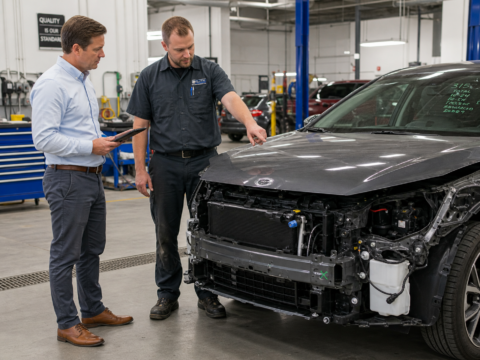
So insurers did what most large organizations do when costs climb and headcount becomes a liability: they engineered the process. Rather than investing deeper in training, field expertise, and professional judgment, the industry built toward a system that could run with fewer people, lower cost per claim, and tighter standardization.
That distinction matters more than it might seem. The claims function did not modernize from a position of strength. It restructured from a position of erosion.
As the systems that once built judgment and technical confidence weakened, the industry compensated by replacing discretion with process, ownership with segmentation, and human evaluation with workflow controls. It was not a reinvention. It was triage.
Straight-Through Processing and the Rebuilding of Claims Around Systems
The clearest expression of this shift is the industry’s push toward Straight-Through Processing, or STP. The goal is simple: move claims through the system with as little human intervention as possible. That meant:
- Speed
- Consistency
- Cost Reduction
- Process Control
Software, digital intake, photo estimating, centralized handling, authority ladders, scripts, workflow rules, exception-based escalation all served the same purpose.
This represents a fundamental shift in who or what sits at the center of the claim. In the traditional model, it was the adjuster. In the modern model, it is the system. The adjuster did not disappear. However, the role is no longer the anchor. Today, in many environments, the process leads and the adjuster follows.
Field claims offices were reduced or shut down entirely. Local presence faded. Work moved into centralized and digital channels.
Along the way, the adjuster role lost much of what remained of its identity as a technically demanding, judgment-heavy profession. It became something closer to a processing function inside a managed workflow.
None of this was unintentional. It was the direct answer to what the insurance industry wanted: less reliance on expensive human judgment, more reliance on scalable, repeatable systems.
Ownership and Accountability Were Stripped From the File
Nobody talks enough about what segmentation did to ownership.
In the traditional model, the adjuster owned the file. Even with management oversight and organizational limits, there was a real sense that this was their claim — to investigate, understand, and see through to a conclusion. That ownership created accountability.
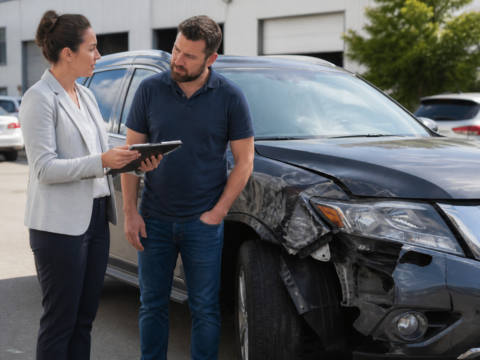
Modern claims processes dissolved that. As handling became segmented, one person took intake, another reviewed photos, another handled damage, another supplements, another total loss, another escalations, another exceptions. The file stopped belonging to anyone in any real sense. It simply moved through a system.
When everyone touches the file and no one owns it, accountability evaporates. Hard conversations get delayed or handed off. Customers get partial answers. Shops get bounced from one function to the next. Nobody has to be wrong because nobody was ever fully responsible.
The adjuster is no longer the conductor of the process. They’re one node in it. And in that kind of structure, it’s easy for every part of the system to point somewhere else.
That is why modern claims feel more procedural and less accountable — because structurally, they are.
The Work Became Harder While the Human Standard Was Lowered
If the work had become simpler as the system automated, the reliance on less-experienced people might have been manageable. But that is not what happened.
The work got harder. Vehicles became more technologically advanced. Repair procedures became more complex. Electronics, sensors, scanning, calibration requirements, OEM procedures, and interdependent systems became central to doing the job right. Documentation expectations grew. Total loss handling became more sensitive. The consequences of bad decisions — legal and financial — did not shrink simply because the process was reengineered around speed.
The industry was pushing toward a system-driven model at the exact moment the subject matter of the claim demanded more technical judgment, not less. This is especially true of OEM repair procedures.
OEM Procedures Created a New Gap
The industry response to procedure disputes has often been to tell shops to document more: attach the position statement, include the scan results, cite the procedure by name. That advice is not wrong. The documentation has to be there. However, it is incomplete, because it assumes the person receiving it is equipped to evaluate it.
Many are not. And here is the dynamic rarely discussed: presenting more technical documentation to a defensive, undertrained adjuster does not produce better decisions. It creates more avoidance. The file gets larger. The answer stays no.
In many cases, the adjuster is not rejecting the request because they reviewed the procedure and disagree. They are rejecting it because they do not understand what they are seeing and do not feel safe making a decision they cannot defend.

The documentation is necessary for the file. But the conversation requires something different: a plain-language translation of what the procedure requires, why skipping it creates a specific and documentable risk, and what the liability exists if it is declined in writing and something goes wrong. That is not a technical argument. It is a decision-framing argument, and one an undertrained adjuster can act on.
That is a contradiction that has never really been resolved. The work was getting more technical at the exact moment the role was being made less technical. The industry lowered the human standard while complexity was raising it.
Rather than closing that gap through deeper training, mentorship, and stronger professional judgment, the industry filled it with process. That did not solve the problem. It buried it inside the workflow.
The Modern Adjuster Often Starts From Vulnerability, Not Confidence
Here is where this stops being an operational story and becomes a human one.
The modern adjuster starts from a position of vulnerability, not confidence. They are placed in high-pressure roles with limited preparation — limited grounding in repair complexity, uneven understanding of vehicle technology, incomplete confidence in policy interpretation, and unclear authority. They are expected to make and communicate significant decisions inside a system built around speed, oversight, and control.
That environment produces defensiveness. People who are not confident in what they know become defensive about what they can control.
In claims, that defensiveness reshapes the whole tone of the file. Therefore, the customer looks suspicious. The shop looks suspicious. The supplement looks like a challenge. Disagreement starts to feel like manipulation. The claim stops beginning from investigation and starts beginning from self-protection.
The friction shops encounter is not always hostility or intentional unfairness at the individual level. Often, it reflects a system staffed by people who do not feel secure enough in their own knowledge to exercise calm, confident judgment. So they lean harder on scripts, process, authority limits, and defensive posture. They are not bad actors. They are undertrained people trying to survive a job that demands more than they were prepared for.
That shift in the human starting point of claims handling — from confidence to defensiveness — is one of the most consequential things that has changed.
The Modern Claims Department Is a Managed Decision System
Today’s claims department is a managed decision system. Intake, routing, segmentation, authority levels, review triggers, digital communication, workflow management, documentation requirements, escalation layers, performance metrics — now shape the file.
The person talking to the customer or the shop may sound like a decision-maker. However, the file is being shaped by forces well above them: supervisor oversight, software outputs, process rules, authority limits and severity controls.
This is why claims frequently feels impersonal. A direct question gets a process answer. A technical issue gets a scripted response. Files move through layers rather than through judgment. The department was not designed around deep individual understanding. It was designed to manage volume, create consistency, control outcomes, and document defensibility.
No argument in that this design makes no sense.
Insurers wanted consistency, cleaner documentation, reduced leakage, and tighter controls. Those are real goals. However, a system built to produce consistency is not the same as a system built to produce ACCURACY. Rules can standardize outputs. They cannot guarantee the outputs are informed.
When the people inside the system are not adequately trained, process does not solve the problem. It only makes the problem harder to see.
The Breakdown Was Ultimately a Failure of Informed Human Oversight
Digital estimating, centralization, workflow redesign — those are the visible changes. The deeper breakdown was what happened to the people inside the system.
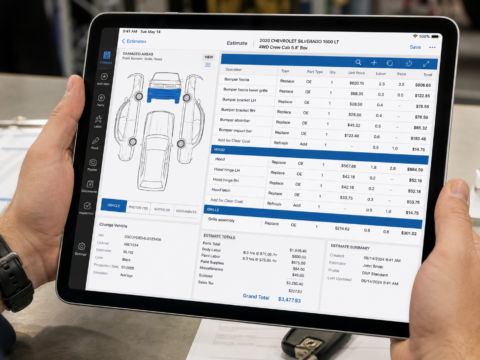
Any functioning claims environment requires a human check. The adjuster must understand enough to evaluate the issue. The supervisor must understand enough to assess the adjuster’s handling. The manager must know when the process, script, or software output is producing the wrong answer. Somewhere in the chain, someone must have enough knowledge to stop the system when it is heading in the wrong direction.
The breakdown happens when that check is gone.
If the adjuster does not fully understand the issue, and the supervisor does not fully understand the issue, and both rely on systems they cannot independently evaluate, the process has no real check left.
The software wins. The script wins. The workflow wins. The authority ladder wins. Not because those tools are right, but because no one in the chain has the knowledge or confidence to challenge them.
This is not a training problem. It is a structural failure of informed oversight.
The people who are supposed to supervise the process and protect the consumer often do not have the knowledge to do so. If they do not understand vehicle technology, repair logic, policy implications, or what best practices look like, they cannot reliably tell the difference between a process that is protecting the company and one that is just protecting itself.
Meaning, the model broke down in the absence of people who knew enough to catch it when it was wrong.
The Public Image of the Adjuster No Longer Matches the Reality of the Role
The public still pictures the adjuster as a helper. A guide, an explainer, an evaluator working in the consumer’s interest. That image has been remarkably resilient even as the role has changed dramatically.
Many adjusters today are not functioning as guides in any traditional sense. They are processors inside a managed system. They are undertrained, under pressure, authority-limited, and operating defensively. Instead of leading the consumer through the claim with expertise and confidence, they are managing the consumer through a process they do not control.
Helping someone and controlling their path through a system are different. Guiding someone and routing them are different. Evaluating a claim and processing it are different. The words sound similar enough that people do not immediately notice the gap — until they are in the middle of a claim and something goes wrong.
Consumers feel the difference even when they can’t name it. Shops feel it every day.
Customers and repair professionals keep walking into the modern claims department expecting knowledgeable, accountable guidance from a role that has been structurally stripped of both.
Why This Matters to Collision Repair Shops
For collision repair shops, understanding this environment is not optional. It changes how you must operate.
You can no longer assume technical truth will speak for itself or even that the person on the file understands what you are presenting. You cannot assume one clear explanation will resolve a dispute, or that the individual you are talking to has the authority to fix what is wrong.
And you absolutely cannot assume the process will catch its own mistakes, because the people responsible for catching them may not be equipped to.
What that means is that shops must build their communication and documentation strategy around the system as it exists — not the one they wish existed.
That means:
- Narrow the issues clearly
- Separate repair questions from policy questions
- Ask precise questions
- Build files that survive review by someone not in the original conversation
- Communicate in ways that are hard to distort, hard to ignore, and easy to escalate
Being right used to be enough. Today, you have to be right, clearly documented, structurally sound, and persistent enough to push past a process that was not designed to make it easy.
Shops also have a role in helping customers understand what they are walking into. Most consumers believe the adjuster is guiding the process in an informed and accountable way. Part of the shop’s job now is explaining — diplomatically but honestly — that the person on their file may be working inside systems, scripts, and authority layers that limit both their knowledge and their ability to act on it.
None of this means every claim should turn adversarial. It means shops must be realistic about the system they are navigating and deliberate about how they protect the customer inside it.
Conclusion
The traditional claims model was built around the trained adjuster. The modern one is built around the system. That is not a subtle shift — it is a complete reorientation of where knowledge, authority, and accountability live.
Claims changed because the traditional model was too labor-heavy, too expensive, and too difficult to sustain at scale. The industry rebuilt around software, Straight-Through Processing, workflow, centralization, and reduced dependence on human judgment. That part most people in the industry understand, at least in theory.
What is less understood is what happened on the human side while the process was being systematized. The work itself got harder. Vehicles became more complex. Repair became more complex. Documentation and decision quality became more critical. Instead of raising the human standard to match that complexity, the industry lowered it. Training weakened. Experience thinned. Turnover accelerated. The adjuster role shifted away from deep evaluation and toward processing.
That combination created a system built on vulnerability.
Vulnerable people inside rigid systems become defensive. Defensive people defer to workflow, scripts, and software they do not feel confident enough to challenge. Once the human check weakened, the system became dominant. Ownership fragmented and accountability declined.
The public image of the adjuster stopped matching what the adjuster role actually was.
For the collision repair industry, this is the critical point. Until shops, consumers, and the broader industry accept that the most important transformation in modern claims was human — not technological — they will keep trying to solve today’s problems with a picture of the adjuster that no longer exists.
The file changed. But so did the people handling it.
Until the industry honestly addresses that second point, it will continue misreading why the system behaves the way it does—and continue bringing the wrong tools to fix it.