
File Process & Standard Operating Procedures
Total Loss Claim Handling
Total Loss Claim Handling: A Complete Training Manual for Collision Repair Shops
When a vehicle is declared a total loss, most collision repair shops lose control of the file. The repair process stops, the customer becomes confused, the insurance company shifts the conversation to settlement, and the vehicle may continue occupying valuable shop space while storage, teardown, administrative work, title issues, and customer communication become harder to manage.
Total Loss Claim Handling: File Process & Standard Operating Procedures — A Complete Training Manual for Collision Repair Shops was written to help shops take control of the total loss process before the file becomes a financial and operational problem.
This book gives collision repair professionals a practical framework for handling total loss claims from intake through vehicle release, payment, documentation, salvage, customer communication, and file closure. It is designed for shop owners, estimators, CSRs, managers, total loss coordinators, and anyone responsible for protecting the customer, the shop, and the file when a repair claim turns into a total loss.

Why Total Loss Claims Create Problems for Collision Repair Shops
A total loss claim is not simply a repair that stopped. It is a different type of file with different risks.
Once the insurer determines that the vehicle may be a total loss, the shop can quickly find itself caught between the customer, the insurance company, the lienholder, the tow provider, and sometimes the salvage vendor. The vehicle may remain on the property while the insurer reviews value, the customer waits for settlement, and the shop continues to carry the cost of space, administration, documentation, teardown, scanning, storage, and communication.
Without a clear process, total loss files can create problems such as:
- Unpaid storage charges
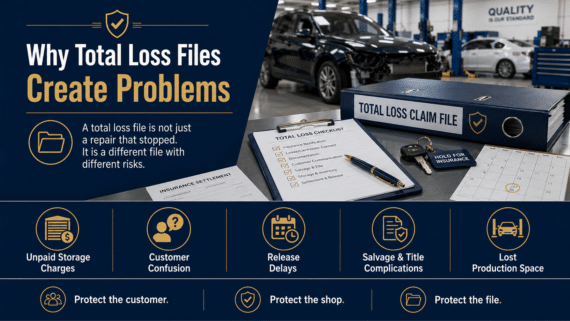
- Confusion over customer authorization
- Disputes over teardown or diagnostic work
- Delays in vehicle release
- Poor documentation of fees and communication
- Misunderstandings about consent and non-consent storage
- Customer frustration
- Insurer pushback on charges
- Lost production space
- Title, salvage, and lienholder complications
- Weak file documentation if the dispute escalates

Total Loss Claim Handling helps shops recognize that a total loss file must be managed intentionally from the beginning. The book teaches that the best time to protect the file is before the vehicle becomes a problem.
A Standard Operating Procedure for Total Loss Files
Many collision repair shops have strong repair procedures but weak total loss procedures.
They may know how to write an estimate, identify damage, document a repair plan, and communicate with the insurer during an active repair claim. But when the vehicle becomes a total loss, the file often moves into a gray area. Who is responsible for follow-up? When should storage begin? What forms should be signed? Who explains the process to the customer? What fees are owed? When should the vehicle be released? What happens if the customer does not respond?
This manual helps shops create a structured total loss SOP so the file does not depend on memory, habit, or whoever happens to answer the phone.
A strong total loss SOP should help the shop:
- Identify potential total loss vehicles earlier
- Separate repair files from total loss files
- Document customer authorization
- Explain the shop’s charges clearly
- Track communication with the insurer and customer
- Protect storage and administrative fees
- Understand vehicle release requirements
- Manage title and salvage issues
- Reduce unnecessary delays
- Close the file with cleaner documentation
The purpose of the book is not to make total loss claims more complicated. It is to give shops a repeatable process so total loss claims become more predictable, better documented, and less damaging to the business.

Understanding What a Total Loss Really Means
A total loss decision is usually based on the relationship between the vehicle’s actual cash value, the cost of repair, applicable thresholds, salvage value, policy terms, and state-specific rules.
For the customer, the phrase “total loss” may sound simple. To the shop, it can create complicated operational questions. Is the vehicle still repairable? Who owns the decision? What happens if the customer wants to keep the vehicle? What if the vehicle has already been torn down? What if the repair plan was written in good faith before the total loss decision was made? What if the insurer wants to pick up the vehicle before charges are paid?
Total Loss Claim Handling explains why shops need to understand the total loss process well enough to protect themselves and explain the issue to the customer without creating confusion.
The book helps shops view the total loss file as a sequence of decisions, not a single event.
Consent, Authorization, and File Control
One of the most important issues in total loss handling is consent.
Shops need to understand who authorized the vehicle to be on the property, who requested the work, who signed the repair authorization, and who has the authority to approve charges, release the vehicle, or make decisions about the file.
A total loss file may involve the vehicle owner, an insured, a claimant, a lienholder, a tow company, a fleet owner, an insurer, or another authorized party. Confusion over consent can lead to unpaid charges, customer disputes, and pressure from the insurer or salvage vendor.
This book helps shops think through questions such as:
- Who gave consent for the vehicle to be at the shop?
- Was the vehicle brought in for repair, inspection, teardown, or storage?
- What did the customer authorize?
- What fees were disclosed?
- Who is responsible for charges?
- Has the shop documented communication clearly?
- What must happen before the vehicle is released?
- Is the insurer asking the shop to release the vehicle before payment is resolved?
By organizing these questions into a standard operating procedure, shops can reduce risk and improve file control.
Storage Fees and Administrative Charges
Total loss files often create conflict over storage and administrative fees.
A vehicle that cannot be repaired or is waiting for settlement still occupies space. The shop may also spend time communicating with the customer, insurer, lienholder, tow vendor, salvage vendor, or rental provider. Employees may be asked to gather documents, provide photos, prepare invoices, respond to settlement questions, release personal property, coordinate pickup, or explain fees.
These tasks carry real operational costs.
Total Loss Claim Handling helps shops understand why storage and administrative charges must be supported by documentation, disclosure, communication, and consistency. A fee is easier to defend when the shop can show when the vehicle arrived, what was authorized, what work was performed, what communication occurred, what delays existed, and when the vehicle was available for release.
The book also helps shops think through fee policies before a dispute begins.

The Problem With Unmanaged Total Loss Vehicles
Every day a total loss vehicle remains at the shop, it can create financial pressure.
It may take up a production space, parking space, storage area, or tow lot space that could otherwise be used for repairable work. It can create liability concerns, administrative burden, customer frustration, and tension with insurers or salvage vendors. If the shop does not have a process, the vehicle can remain longer than necessary while no one owns the next step.
This is especially important during periods when collision repair volume, staffing, claims handling, and insurer processes are changing. Shops cannot afford to let total loss vehicles sit unmanaged while the business absorbs the cost.
The book encourages shops to treat total loss files as active files that require assigned responsibility, documented communication, and time-based follow-up.
Customer Communication During a Total Loss Claim
Customers often do not understand what happens when their vehicle is declared a total loss.
They may believe the shop controls the settlement, the insurer controls the repair decision, or the tow vendor controls the vehicle. They may not understand that the vehicle may still create charges after the total loss decision. They may not know what happens to personal property, license plates, titles, lienholder payoff, salvage, rental, deductible issues, or owner retention.
A shop that communicates clearly can reduce frustration and protect the relationship.
Total Loss Claim Handling helps shops build better customer communication around questions such as:
- What does a total loss mean?
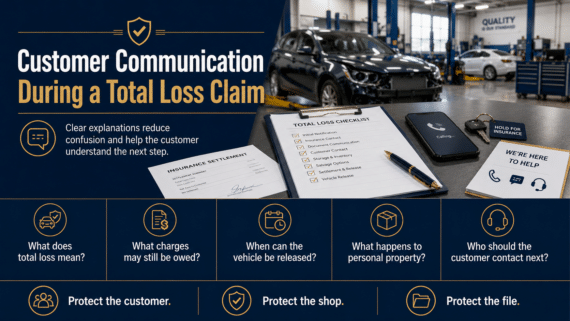
- Who determines the vehicle’s value?
- What charges may still be owed to the shop?
- What happens if the customer wants to retain the vehicle?
- What documents may the insurer request?
- When can the vehicle be released?
- What happens to personal property?
- Who should the customer contact with settlement questions?
- What does the shop need before releasing the vehicle?

Clear communication helps the customer understand that the shop is not creating unnecessary problems. The shop is managing the file, protecting its work, and following a process.
Title, Salvage, and Owner Retention Issues
Total loss claims can create title and salvage complications that shops should not ignore.
When a vehicle is declared a total loss, decisions about salvage branding, title transfer, lienholder interest, owner retention, and vehicle movement can affect the customer and the shop. If the customer keeps the vehicle after settlement, there may be state-specific title or salvage requirements. If the vehicle has a lienholder, the settlement may involve payoff and collateral issues. If the insurer or salvage vendor wants to remove the vehicle, the shop may need to confirm release authority and payment status.
The book helps shops recognize that title and salvage issues are not just paperwork problems. They can affect liability, customer expectations, payment, and file closure.

Protecting the Shop With Better Documentation
Documentation is the foundation of a strong total loss file.
If a dispute develops, the shop needs more than memory. It needs a record that shows what happened, when it happened, who was contacted, what was authorized, what was owed, and what steps were taken to move the file forward.
A well-documented total loss file may include:
- Signed authorizations
- Intake notes
- Arrival date and time
- Photos
- Estimate or repair plan records
- Teardown documentation
- Storage dates
- Fee disclosures
- Customer communication
- Insurer communication
- Release requests
- Invoices
- Payment records
- Title or salvage notes
- Personal property documentation
- File closure notes
Total Loss Claim Handling teaches shops to build a file that can be explained, reviewed, and defended.
Who Should Read Total Loss Claim Handling?
This book is designed for collision repair professionals who want a more organized way to manage total loss claims.
It is especially useful for:
- Collision repair shop owners
- General managers
- Estimators
- Customer service representatives
- Total loss coordinators
- Repair planners
- Office managers
- Bookkeepers handling claim payments
- Independent appraisers
- Consultants and trainers
- Shops dealing with storage, release, and salvage disputes
It is also helpful for professionals who want to train staff on how to handle total loss files consistently instead of treating each one as a one-off problem.
What Readers Will Learn
Readers will learn how to:
- Identify total loss risk earlier in the claim
- Build a repeatable total loss SOP
- Understand consent and authorization issues
- Improve customer communication
- Document storage and administrative charges
- Track communication with insurers and customers
- Manage vehicle release requests
- Recognize title, salvage, and owner-retention concerns
- Reduce unpaid charges and avoidable delays
- Protect shop space, time, and file integrity
- Train staff to handle total loss claims consistently
- Close total loss files with better documentation
The goal is to help shops stop reacting to total loss problems after they happen and start managing the file from the beginning.
A Better Way to Handle Total Loss Claims
Total loss claims are not going away. As vehicle values, repair costs, insurer processes, parts delays, technology, and claim handling practices continue to change, shops need a stronger process for managing vehicles that may never become repairs.
Total Loss Claim Handling gives collision repair shops a practical, operational framework for protecting the customer, the shop, and the file.
This is not just a book about total loss theory. It is a working manual for building procedures, training employees, managing communication, documenting charges, and reducing the financial damage that total loss files can create inside a collision repair business.