
Consumer Guide:
I’ve Got A Problem With My Insurance Claim
When something goes wrong with an insurance claim, most consumers do not know where to begin. They may feel ignored, delayed, underpaid, confused by policy language, or pressured to accept a decision they do not fully understand. Consumer Guide: I’ve Got a Problem With My Insurance Claim was written to help consumers slow the process down, understand their rights, organize their information, and take more effective action when a claim is not going the way it should.
This practical insurance claim guide gives policyholders a clearer way to think through common claim problems, communicate with the insurance company, document the file, and decide what steps may be available when a dispute develops. It is designed for
everyday consumers who need help understanding what is happening inside the claim process before they make a decision, accept a settlement, file a complaint, or escalate the issue.
Why Insurance Claims Become So Confusing
Most consumers buy insurance believing the policy will protect them when something goes wrong. But once a claim begins, the process can quickly become overwhelming. Adjusters may ask for documents the consumer does not understand. Repair estimates may not match. Payments may be delayed. Coverage explanations may be unclear. The insurance company may say one thing while the repair facility, contractor, appraiser, or service provider says another.
For the consumer, the problem is not just the claim itself. The problem is the information imbalance.
Insurance companies handle claims every day. Consumers usually do not. That means the insurer understands the forms, timelines, language, internal procedures, and settlement process far better than the person whose vehicle, home, property, or financial recovery is at stake.

Consumer Guide: I’ve Got a Problem With My Insurance Claim helps close that gap.
A Guide for Consumers Who Need Clear Answers
This book is not written for insurance insiders. It is written for the person who is trying to understand what is happening, what questions to ask, and how to protect themselves from making uninformed decisions.
The guide helps consumers understand how to look at the claim file, identify the real issue, and separate emotion from documentation. It explains why the way a consumer communicates with the insurance company can matter, why written records are important, and why a claim dispute should be approached with facts, timelines, and clear requests.
Instead of telling consumers to simply “fight the insurance company,” the book teaches a more useful approach: understand the process, document the problem, ask better questions, and build a clearer record.
Common Insurance Claim Problems This Guide Can Help With
Insurance claim disputes can happen for many reasons. Sometimes the disagreement is about coverage. Sometimes it is about the amount of damage. Sometimes it is about delays, repair costs, valuation, policy interpretation, communication, or the way the claim is being handled.
This consumer insurance claim guide can help readers think through problems such as:
- The insurance company is delaying the claim.
- The settlement offer seems too low.
- The estimate does not include all necessary repairs.
- The insurer and repair facility disagree.
- The consumer does not understand the coverage decision.
- The claim has been denied or partially denied.
- The adjuster is not responding.
- The consumer is being asked to sign documents they do not understand.
- The insurance company is using confusing policy language.
- The consumer does not know whether to file a complaint.
- The claim process feels unfair, rushed, or one-sided.
The goal is not to make every consumer an insurance expert. The goal is to help consumers become better prepared, better organized, and less vulnerable during a stressful claim process.
Understanding the Claim Before Escalating the Fight
One of the biggest mistakes consumers make during an insurance dispute is escalating before they understand the issue. They may file a complaint, threaten legal action, or become confrontational before they have identified the actual decision being made by the insurance company.
That can make the process harder instead of easier.
Consumer Guide: I’ve Got a Problem With My Insurance Claim encourages readers to first identify the core question:
What exactly is the insurance company saying yes or no to?
Once the consumer understands that, they can begin gathering the right information. Is the problem about coverage? Is it about price? Is it about documentation? Is it about policy language? Is it about damage verification? Is it about a delay? Is it about a claim-handling practice?
A clearer question leads to a stronger response.

Why Documentation Matters in an Insurance Claim
In many claim disputes, the consumer’s memory of what happened may not be enough. Phone calls, verbal statements, missed promises, changing explanations, and confusing instructions can become difficult to prove later.
That is why documentation matters.
The book helps consumers understand the importance of keeping records such as:
- Claim numbers
- Dates and times of conversations
- Names of adjusters or representatives
- Emails and letters
- Estimates and invoices
- Photos and videos
- Policy documents
- Payment records
- Denial letters
- Repair or inspection reports
- Written explanations from the insurance company
- Notes summarizing phone conversations
Good documentation does not guarantee a specific result, but it can make the issue easier to explain, review, and escalate when necessary.
Asking Better Questions During the Claim Process
Many consumers do not know what to ask when an insurance claim goes wrong. They may ask broad questions such as, “Why aren’t you paying?” or “Why is this taking so long?” Those questions are understandable, but they may not produce useful answers.
The guide helps consumers ask more specific questions, such as:
- What policy language are you relying on for this decision?
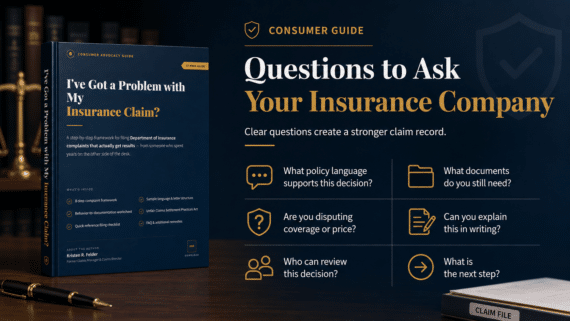
- What documentation do you still need from me?
- What part of the estimate are you disputing?
- Are you denying coverage or disputing the amount?
- Can you provide your explanation in writing?
- Who has authority to review this decision?
- What is the next step in the claim process?
- What deadline applies to this decision?
- What facts would change your position?

Specific questions create a clearer record. They also make it harder for the claim issue to remain vague.
When the Insurance Company and Repair Facility Disagree
One of the most frustrating claim problems occurs when a repair facility says the insurance estimate is incomplete, but the insurance company says it will not pay more. Consumers are often caught in the middle and may not understand whether the issue involves cost, procedure, documentation, safety, policy language, or negotiation.
This is especially common in collision repair claims, where vehicle repairs can involve hidden damage, manufacturer repair procedures, parts selection, labor operations, calibration requirements, structural repairs, refinishing, and safety-related decisions.
Consumer Guide: I’ve Got a Problem With My Insurance Claim helps consumers understand that the issue should not simply be reduced to “the shop wants more money” or “the insurer does not want to pay.” The better question is whether the requested repair cost is properly supported and whether the insurance company has clearly explained its position.
Consumers should understand the dispute before choosing sides, approving repairs, accepting payment, or walking away from a claim issue.
Filing a Complaint or Seeking Help
There may be times when a consumer needs to escalate a claim dispute. Depending on the facts, that may include asking for a supervisor review, submitting a written dispute, filing a complaint with the state department of insurance, invoking an appraisal process if available, speaking with an attorney, or seeking help from a qualified professional.
The guide does not replace legal advice. Instead, it helps consumers become more prepared before they take the next step.
A consumer who understands the issue, has organized documents, and can explain the dispute clearly is in a stronger position than a consumer who only knows they are frustrated.

Who Should Read Consumer Guide: I’ve Got a Problem With My Insurance Claim?
This book is for consumers who feel uncertain, overwhelmed, or stuck in an insurance claim.
It may be helpful for people dealing with:
- Auto insurance claims
- Collision repair disputes
- Property damage claims
- Delayed claim payments
- Low settlement offers
- Repair estimate disagreements
- Claim denials
- Coverage questions
- Poor communication from the insurance company
- Confusing claim documents
- Escalation decisions
It is also useful for repair professionals, service providers, consultants, and customer-facing businesses that want to better explain the claim process to consumers.
What Readers Will Learn
Readers will learn how to:
- Understand the basic structure of an insurance claim
- Identify the real problem in a claim dispute
- Organize claim documents and communication
- Ask better questions of the insurance company
- Request written explanations
- Understand the difference between coverage disputes and price disputes
- Recognize when a claim issue may need escalation
- Communicate more clearly and effectively
- Avoid making decisions based only on pressure or frustration
- Build a stronger record before accepting or challenging a claim decision
The book gives consumers a practical way to approach the claim process with more confidence and less confusion.
A Better Way to Handle Insurance Claim Problems
Insurance claim disputes are stressful because consumers are often making important decisions while they are already dealing with damage, loss, inconvenience, or financial pressure. When the claim process becomes confusing, it is easy to feel powerless.
But consumers are not powerless when they understand the process.
Consumer Guide: I’ve Got a Problem With My Insurance Claim gives readers the tools to slow down, ask better questions, document the facts, and make more informed decisions. It helps consumers move from confusion to clarity and from frustration to a more organized plan of action.
Order Consumer Guide: I’ve Got a Problem With My Insurance Claim
If you are dealing with an insurance claim problem, do not rely on confusion, frustration, or guesswork. Learn how to understand the claim process, organize your documentation, ask better questions, and protect yourself from making uninformed decisions.
Order your copy of Consumer Guide: I’ve Got a Problem With My Insurance Claim today and take the first step toward handling your insurance claim with more confidence and clarity.